By Ignacio Palacios
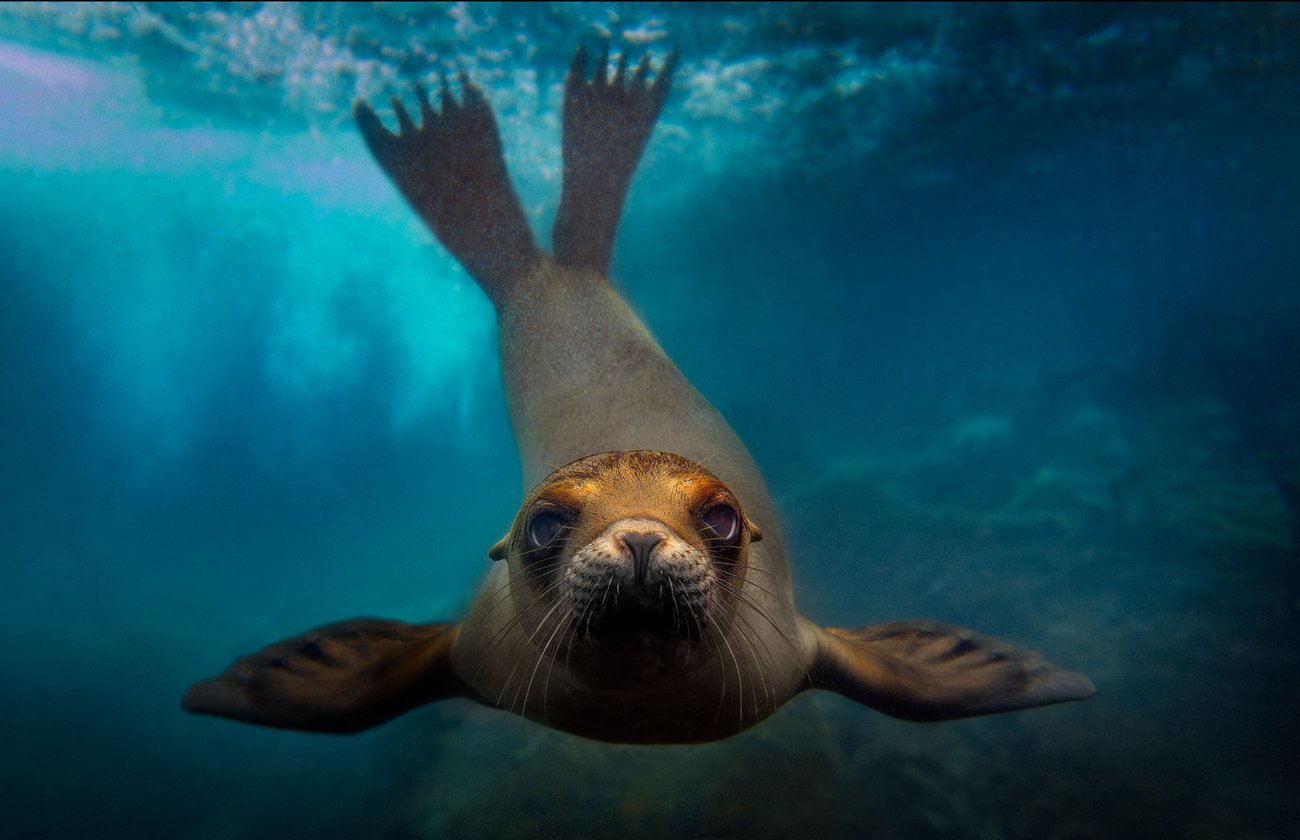
There are few wildlife encounters as entertaining as snorkelling with sea lions in the Galápagos Islands. They are incredibly curious, playful and agile underwater, and the younger ones, in particular, seem to enjoy interacting with snorkellers. Sometimes they swim around you, sometimes they disappear into the blue before suddenly reappearing, and occasionally they come so close that you hardly know where to point your camera!
This photograph is one of my favourites from my recent trip with Richard I’Anson. A young sea lion approached me while I was snorkelling and, for a brief moment, appeared to stop and look directly at its own reflection on the housing of my camera. It was one of those fleeting encounters that lasted just a fraction of a second, but it was enough to capture the image I had been hoping for.
Getting the photograph, however, required a little preparation and the right equipment. For this trip, I decided to take my Sony RX100 VII, a remarkably capable little compact camera, together with a Nauticam underwater housing (NA-RX100VII). I normally photograph with my Nikon Z9, and I have a fairly substantial Nauticam underwater setup with a large dome and strobes. It is fantastic equipment, but it is also bulky, heavy and not particularly practical when you only intend to snorkel for a few days.
On previous trips, I had often relied on a GoPro. While GoPros are excellent for underwater video, I always found them somewhat limiting when it came to capturing high-quality still photographs. I wanted something that would give me much more control and image quality without having to carry my entire Nikon underwater system. The Sony RX100 VII seemed like the perfect compromise, and I certainly wasn't disappointed.
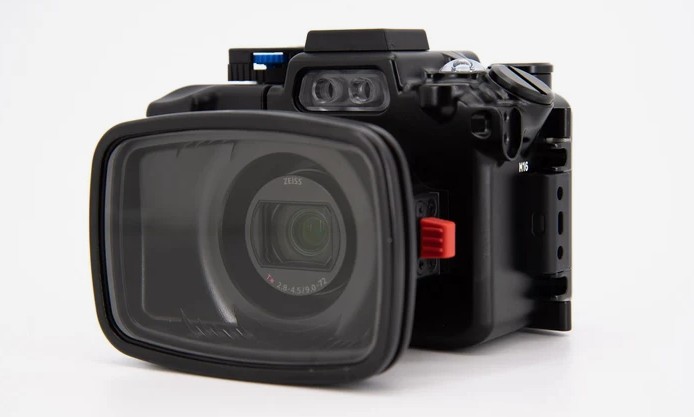
It is tiny, incredibly fast and surprisingly powerful for a compact camera. It can shoot bursts at up to 20 frames per second, which is particularly useful when photographing fast-moving wildlife underwater. When the sea lions started playing around me, I was able to shoot hundreds of frames and increase my chances of capturing that split-second interaction.
The camera costs approximately US$1,300, while the Nauticam housing is around US$1,800. Neither is particularly cheap for a compact camera setup, but Nauticam is renowned for its exceptional underwater engineering and build quality. For someone who wants to take underwater photography seriously without carrying a huge DSLR or mirrorless system, it is an excellent alternative.
I also find this little camera useful well beyond underwater photography. When travelling in certain locations where I prefer not to attract attention with a large professional camera, particularly in some African cities, its discreet size is a real advantage.
As with most photographs, the original image needed a little work in post-processing. One of the biggest challenges when photographing underwater is dealing with all the suspended particles in the water. Even when visibility looks excellent to the naked eye, these particles can become very noticeable in photographs, particularly when sunlight illuminates them.
For this image, I used RC-Astro Backscatter Xterminator, a fantastic tool that saves me an enormous amount of time removing suspended particles from underwater photographs. I also made some additional adjustments in Lightroom and Photoshop, including colour, levels and curves corrections. I cloned one of the sea lion's flippers to create a slightly more symmetrical appearance.
These are techniques that Peter and I will undoubtedly discuss during our 2029 expedition. This will be my third visit to Ecuador and the Galápagos Islands, and I am particularly excited because we will be exploring the western side of the archipelago in a really beautiful boat.
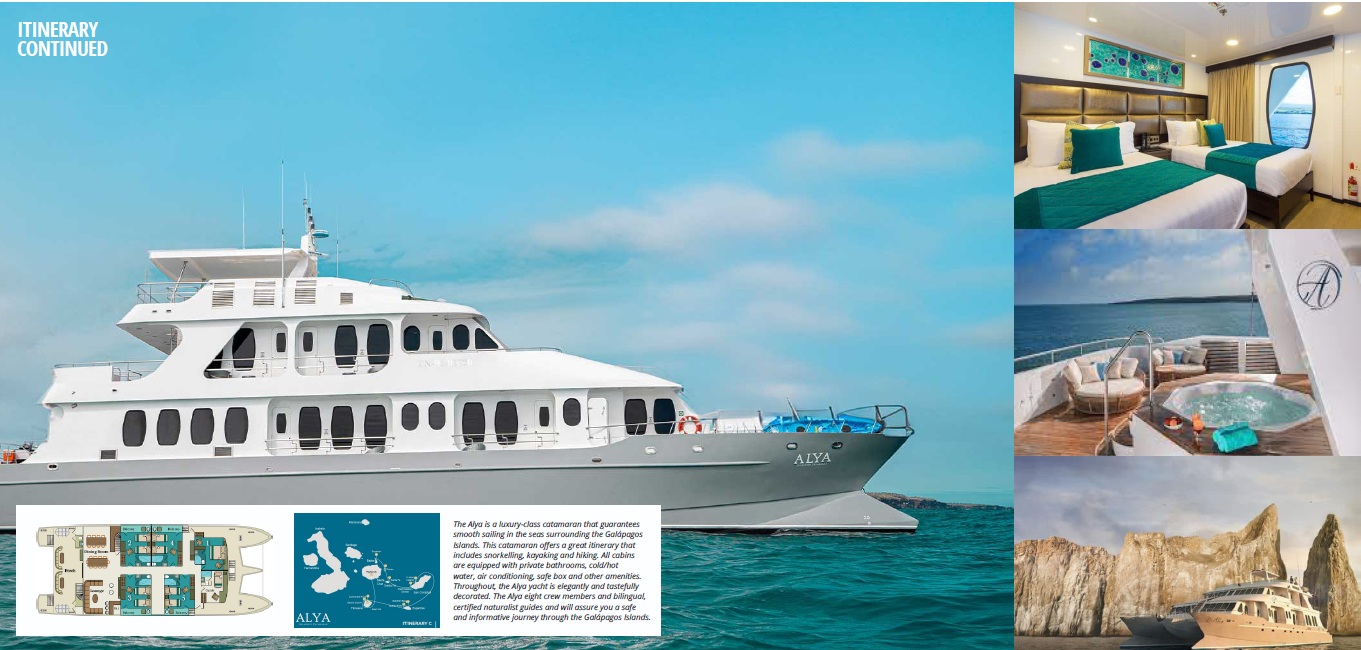
Snorkelling opportunities are available on most days, weather and conditions permitting. The water can be chilly, but our luxury catamaran provides wetsuits and snorkelling equipment for everyone, so there is no need to bring a complete underwater setup unless you prefer to use your own.
And it isn't just sea lions that we will be looking for. One of the most exciting prospects of visiting the western islands is the opportunity to snorkel with Galápagos penguins. I first visited the islands in 2015, and I still remember how many penguins I encountered underwater. They are incredibly cute, surprisingly fast and often not shy at all. They can swim straight towards you and come remarkably close to your lens, providing some wonderful photographic opportunities. Having the chance to photograph both sea lions and penguins underwater is something I find particularly exciting, and it is one of the reasons I am so keen to return.
Of course, the Galápagos is about far more than snorkelling. Above the water, the islands offer some of the most extraordinary wildlife photography opportunities anywhere in the world. Marine iguanas, land iguanas, giant tortoises, waved albatrosses, blue-footed boobies, frigatebirds and countless other species provide endless opportunities for portraits, behavioural photography and environmental images.
And this expedition is also about exploring mainland Ecuador, a country with an incredible diversity of landscapes and wildlife. We will include an excursion to the spectacular Cotopaxi volcano and Quilotoa crater lake, two of the country's most impressive natural landmarks. We will also venture into a beautiful jungle region, where we will have opportunities to photograph colourful parakeets, monkeys, scarlet macaws, anacondas and an incredible variety of tropical birds and wildlife.
It is a wonderful combination of landscapes, wildlife, culture and adventure, all brought together in one expedition.
Join us in 2029! I had a fantastic time on my recent Ecuador and Galápagos expedition with Richard I'Anson, and I am really looking forward to repeating the experience in 2029, this time alongside Peter Eastway. Travelling aboard a luxurious catamaran, exploring remote islands, photographing extraordinary wildlife and having opportunities to snorkel almost every day makes this a very special photographic adventure. Whether you are passionate about wildlife photography, underwater photography, landscapes or simply want to experience one of the most extraordinary wildlife destinations on Earth, this expedition offers something quite unique.
And, of course, there will be plenty of opportunities for Peter and me to share our knowledge, discuss techniques and help you get the best possible photographs throughout the journey. If you have ever dreamed of swimming alongside sea lions and penguins, photographing giant tortoises and marine iguanas, or capturing the incredible landscapes of the Ecuadorian Andes, this could be the adventure you have been waiting for. We would love you to join us!
To secure the boat, we need to make a deposit as this is a very popular part of the planet, so if you are interested, please touch base soon. For more information, visit the website.